
Invisalign® Clear Aligners in Louisville
Straight Teeth. No Metal.
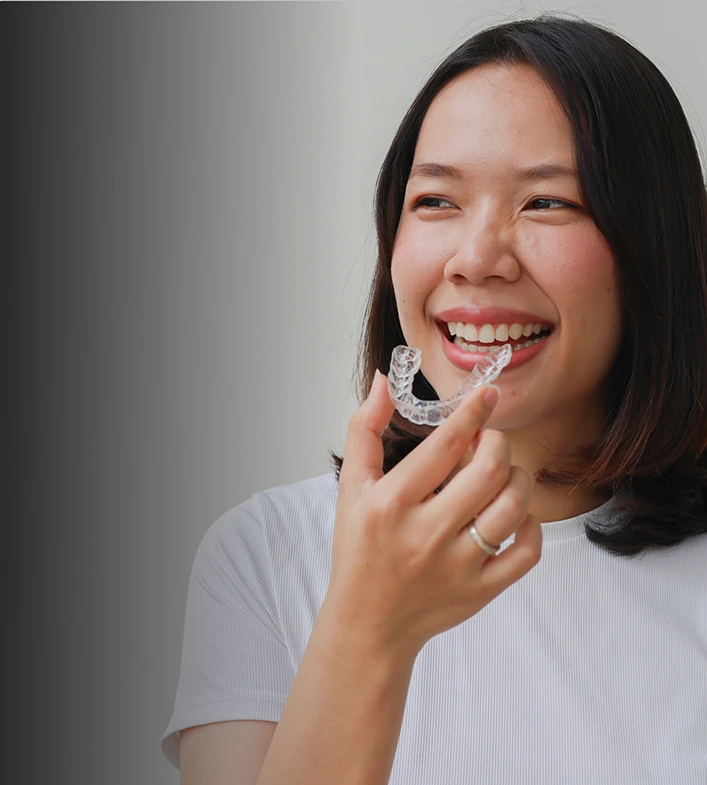
When it comes to straightening teeth, many patients still think that traditional bracket-and-wire braces are their only option. This means many patients avoid getting the orthodontic care they need to look and feel their best. Luckily, the Bell Dental team offers Louisville a more aesthetically pleasing alternative to traditional orthodontics – Invisalign clear braces. To ensure your smile stays whole, healthy, and functional for life, our team will create a custom Invisalign orthodontic plan. If you’re ready to get started, give our Louisville dental office a call to schedule your orthodontic consultation today.
Why Choose Bell Dental for Invisalign®?
- Three Dentists with Years of Advanced Training
- Highly Personalized Treatment Planning to Ensure Accuracy
- Mess-Free Digital Impressions for Comfortable Smile Aligners
Who Can Invisalign® Help?
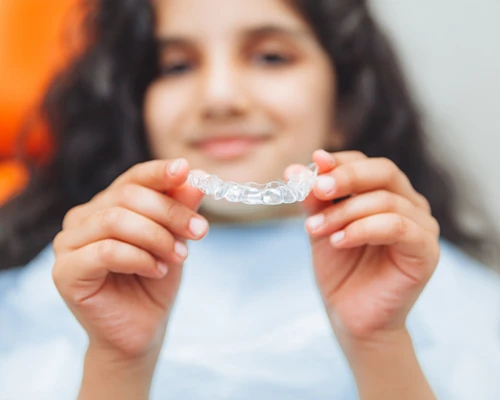
Invisalign is a versatile treatment that can be used to correct a wide range of orthodontic problems. But is it the right choice for your smile? This is a question that we can only answer after examining your mouth and learning about your specific oral health needs. That said, you could potentially be a good candidate for Invisalign if you are currently dealing with any of the orthodontic issues listed below.
Crowded Teeth
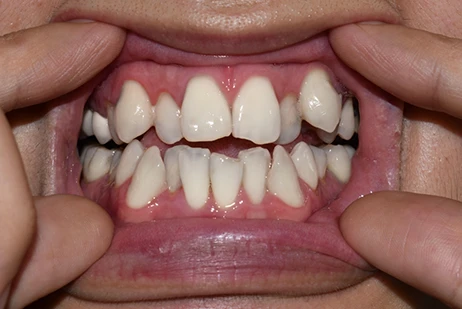
If your teeth are crowded, you may have a hard time cleaning them thoroughly, which can increase your risk of cavities and gum disease. Furthermore, crowded teeth can make it harder to chew and contribute to jaw pain. With Invisalign treatment, we can correct the position of your crowded teeth, so they line up properly. A straighter smile can go a long way toward improving your confidence; you may find yourself smiling more often and showing the world your dazzling Invisalign results!
Gaps Between Teeth
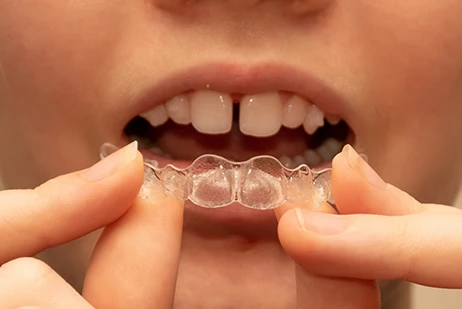
Sometimes, the way your jawbone develops can cause gaps to form between your teeth. It can be easy for bacteria and food particles to become trapped in these gaps, ultimately leading to oral health issues. In many cases, it’s possible to close small gaps in your smile via Invisalign treatment.
Overbite
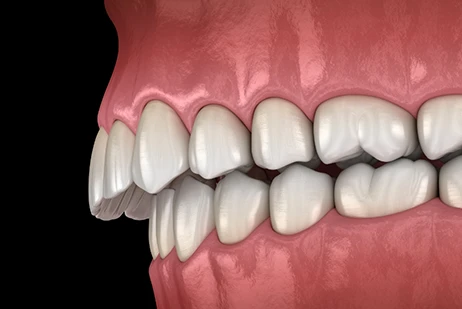
When you close your mouth, your upper front teeth should come down slightly in front of your lower ones. But if they jut out too far, you have what is known as an overbite. When left untreated, an overbite can cause certain teeth to wear down faster than normal, contributing to jaw pain and speech difficulties. Depending on the severity of your overbite, you may be able to use Invisalign to correct it.
Underbite
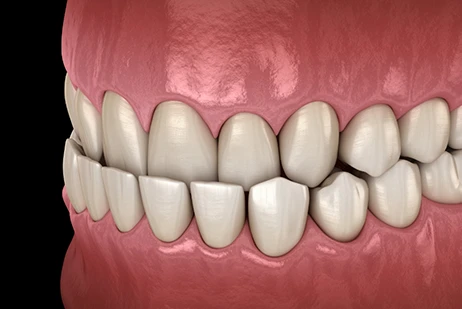
Do your lower teeth sit in front of your upper teeth? This particular alignment issue is called an underbite. One of the most notable consequences of an underbite is that it often plays a role in breathing problems; it may even put you at a higher risk for sleep apnea. When correcting an underbite with Invisalign, it may be necessary to use rubber bands and other attachments in addition to the aligners.
Crossbite
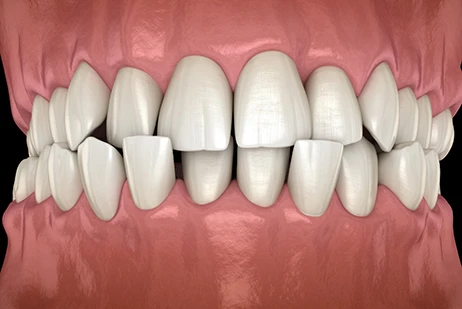
A crossbite is when some of the lower teeth sit in front of the upper ones. This can result from various factors, such as genetics or baby teeth lost earlier than intended. When left untreated, a crossbite can affect how bite pressure is distributed throughout your mouth, potentially leading to jaw pain and excessive enamel wear. Luckily, it’s often possible to fix a crossbite with Invisalign.
Open Bite
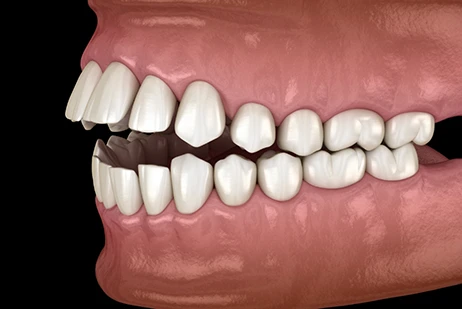
An open bite is a relatively rare type of bite problem where the upper and lower teeth do not make contact when your mouth is fully closed. This can negatively affect your speech by making it harder to pronounce certain sounds. Depending on the situation, we may be able to fix your open bite with customized clear aligners.
Invisalign® vs. Traditional Braces

If you’re trying to decide between treatment with Invisalign clear braces and traditional bracket-and-wire braces, it’s important to take the time to visit with our team to discuss the advantages and disadvantages of both options. In the past, Invisalign couldn’t treat more advanced alignment issues, but today we can correct even those concerns, such as overbite, underbite, and crossbite. Invisalign usually costs slightly more than traditional braces, but dental insurance plans now typically provide the same coverage for aligner orthodontics as they do for traditional braces.
How Invisalign® Works
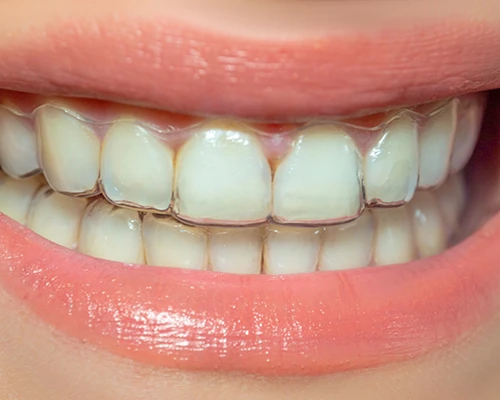
Invisalign uses a series of clear plastic aligner trays to gently shift teeth into ideal alignment over the course of eight to 18 months. Each aligner moves your teeth one step closer to your desired result. You’ll wear the aligners for about two weeks at a time before exchanging the current set for the next in the series. You’ll visit our office every six to eight weeks for short checkups. We’ll examine your smile to ensure your teeth are moving as planned. This allows us to make changes when necessary to keep your treatment plan on track.
Benefits of Invisalign® Clear Aligners
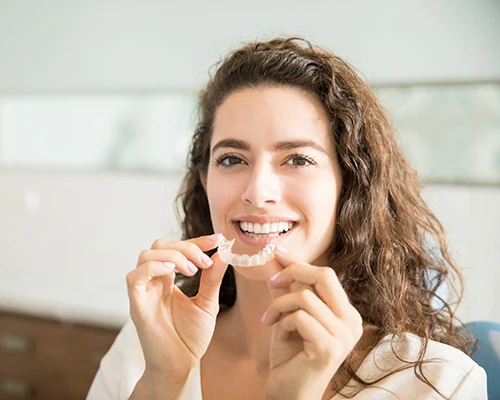
Are you still in the process of deciding whether or not Invisalign is the right orthodontic treatment for you? If so, then you might find it helpful to learn why millions of other patients have chosen to straighten their teeth with clear aligners! With this in mind, keep reading to learn a few of the many advantages of Invisalign.
Clear Aligners are Custom-Made for Comfort
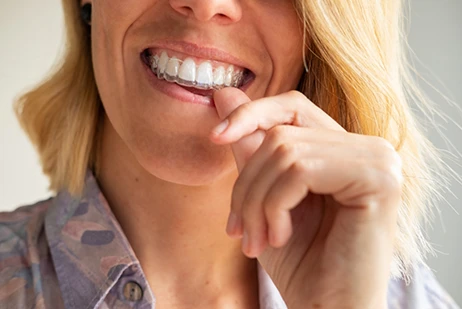
It’s no secret that traditional braces can irritate soft tissue, especially for patients with sensitivities or allergies to metal. Fortunately, Invisalign aligners are custom-made for each patient, crafted from smooth plastic, and are completely metal-free. As a result, patients experience significantly less pain or discomfort throughout their teeth-straightening treatment!
There are Fewer Check-Ins
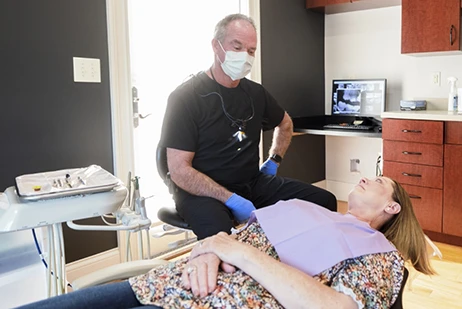
For the busy patient, Invisalign is ideal. Why? To start, there are fewer checkups throughout the course of your Invisalign plan, so you won’t have to worry about keeping up with frequent trips to the orthodontist. Additionally, these progress appointments are usually less than 20 minutes, and the average treatment timeline is only 12-18 months!
You Can Eat All of Your Favorite Foods

Apples, celery, and carrots aren’t the only foods that are off the table with traditional braces. Patients need to steer clear of popcorn, tortilla chips, and pretzels. The good news is that Invisalign doesn’t come with any dietary restrictions! All you need to do is keep your added sugar intake to a minimum, exercise caution with foods that could compromise one of your attachments, and, of course, remove your aligners beforehand.
You’ll Be Able to Brush and Floss Without Any Trouble

One downside of traditional braces is that the metal brackets and wires make it difficult to brush and floss. While tools like interproximal toothbrushes and pre-threaded floss make oral care easier, there is another option: Invisalign. Since the aligners are removable, you will be able to continue your dental care regimen as usual throughout your orthodontic treatment.
No Unwanted Attention Will Be Drawn to Your Smile
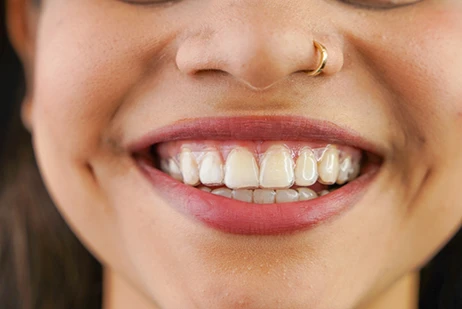
Of course, you don’t want to wait until the very end of your treatment to smile. Don’t worry – you won’t have to try to hide your braces with Invisalign. Since the aligners are completely see-through, they are practically invisible. In fact, patients often report that even the people who see them every day, like their coworkers, have a hard time telling when they are wearing their aligners!
Bonus: Not only are the aligners virtually undetectable, but they are also removable! So, you can take them off when needed, like before a big presentation or an important date.
Understanding the Cost of Invisalign®
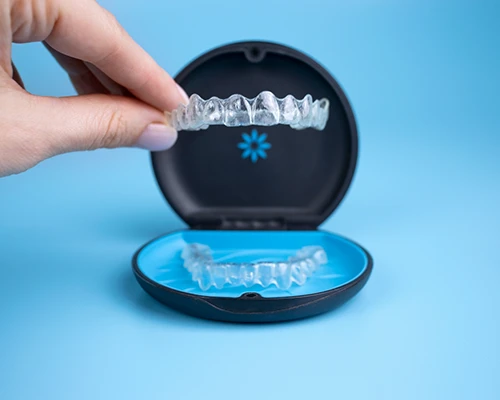
We understand that a major concern for many patients is the pricing of Invisalign treatment. Unfortunately, we can’t provide a general quote without examining your teeth to estimate the cost of Invisalign in Louisville. The good news is that although clear aligners are a newer technology than brackets and wires, in some cases, Invisalign costs about the same as traditional braces! You can learn more about the cost-related factors by clicking below.
Factors That Affect the Cost of Invisalign®
Like all our treatments at Bell Dental, Invisalign is tailored to your unique needs so that pricing will vary on a case-by-case basis. The severity of your teeth’s misalignment and your timeline in the aligners will determine how much treatment will cost. Also, your compliance is important. In other words, if you don’t follow instructions or stay on track with your treatment plan, you could end up paying more overall.
Invisalign® vs. Mail-In Aligners: Which Costs More?
You’ve probably seen commercials or ads for mail-in aligners that promise to save you a ton of money. What they don’t tell you is that you’re basically on your own. You’re responsible for taking your impressions and sending them in, hoping they're accurate. After the initial treatment plan, there is no supervision by a licensed professional. This means that if you encounter a problem, such as a lost aligner or another complication, you can’t work directly with a dentist to change your treatment plan. In the end, mail-in aligners could cost you much more, making Invisalign the safer bet.
Does Dental Insurance Cover Invisalign®?

It depends on your insurance. Some plans include Invisalign treatment in their orthodontic benefits, while others do not. For those fortunate enough to have insurance that covers it, the potential savings are significant. We know that insurance phrasing can be tricky to understand, especially if you’re unfamiliar with how it works. Therefore, if you are considering Invisalign, our team can review your policy with you and work to save you as much as possible.
Options for Making Invisalign® Affordable

Regardless of whether your insurance applies to Invisalign, you may wish to pay for treatment over time, not all at once. That’s why we accept payment through CareCredit. This trusted financier lets you split the cost into more affordable monthly payments. And the best part is that you may qualify for a low interest rate or even no interest at all! You can apply for pre-approval online or in our office, and we can walk you through the application process if you need help.
Invisalign® FAQs
Is Invisalign® Appropriate for Kids and Teens?
In most cases, we only use Invisalign to treat adults and older teens. This is because children tend to lack the responsibility and care that are required during treatment. Traditional braces are often better for children because they not only adjust the bite but are also fixed to the smile. With Invisalign, it can be hard for children to remember to take out and replace their aligners. Additionally, because Invisalign aligners require care and cleaning, we often find that the best candidates for treatment are those old enough to commit to our instructions.
How Much Does Invisalign® Cost?
It’s hard to give patients a specific cost estimate before seeing their smile because many variables can influence the price of treatment. In some cases, preexisting dental issues must be treated before receiving Invisalign. Plus, during treatment, patients may break or lose their aligners, which can increase their total cost. The best way to get a precise cost estimate is to visit our office for a consultation. Dr. Bell will carefully assess your smile before developing a personalized treatment plan, including pricing.
How Long is Treatment with Invisalign®?
The length of your treatment will vary, so it’s hard to give a precise estimate. The condition of your oral health, the severity of your misalignment, and your commitment to your Invisalign schedule are among the main factors that can influence treatment time. Typically, treatment will last between 10 and 18 months. However, patients will be recommended to wear a retainer after they’ve reached their desired results.
When is Invisalign® Not an Option?
Thanks to modern technology, Invisalign can now be used to treat many orthodontic problems. However, serious bite issues such as overbites, underbites, and crossbites may still require treatment with traditional orthodontics. The only way to know with certainty is to visit our office for a consultation. After, we can recommend the best treatment for your needs.
What are the Expected Results from Invisalign®?
After completing Invisalign treatment in Louisville, patients can enjoy a beautifully straight smile. To ensure that your results last, we will recommend a retainer once your treatment is done. Depending on your smile, the use of your retainer may be gradually limited in the following months. Invisalign offers patients a confident way to straighten their teeth and provides consistent results.
What Happens After Invisalign®?
As you approach the end of your time with Invisalign in Louisville, you might begin to wonder what’s next. The answer is “the retention phase.” Once you’ve progressed through the entire series of aligners and are happy with the results, we will take impressions of your teeth so a custom retainer can be made. When it arrives at our office, we’ll call you in for your final appointment, during which we will make sure it fits properly. We’ll also share how often you need to wear it to prevent orthodontic relapse (the phenomenon when teeth begin to drift out of their ideal positions).
Is There Anything I Can’t Eat During My Invisalign® Treatment?
Since Invisalign aligners are removable, you don’t need to abide by a long list of dietary restrictions. You should, however, exercise caution with popcorn, tortilla chips, whole apples, and other crunchy foods, especially if you have attachments. You also need to steer clear of sticky sweets, like sour straws, caramel-filled candies, and taffy.
Does Invisalign® Hurt?
This is one of the most frequently asked questions about Invisalign, and we have good news: the answer is “no.” There are a few reasons we can say this with confidence, starting with the fact that the aligners are crafted from smooth plastic. They are also custom-made to fit the contours of your teeth, which ensures that they don’t dig into the soft tissue in your mouth.
Tip: If one of your trays has a sharp edge, place a piece of dental wax over it or get in touch with our team so we can carefully file it down.