
Dental Bridges in Louisville
Enjoy a Complete, Beautiful, Strong Smile Again

The Centers for Disease Control and Prevention recently shared an interesting statistic: most Americans have lost an average of 12 teeth by age 50. Furthermore, a whopping 178 million adults are missing at least one tooth. Fortunately, there’s a way to restore the look, health, and function of your smile if you are missing one tooth or several teeth in a row: dental bridges. If you’d like to learn more about this tooth replacement solution, then schedule a consultation with our Louisville dental team or read on!
Why Choose Bell Dental for Dental Bridges?
- Advanced Diagnostic Imaging Used for Improved Accuracy
- Mess-Free Dental Impressions Captured Digitally
- Your Dental Insurance Benefits Will Be Maximized
What is a Dental Bridge?
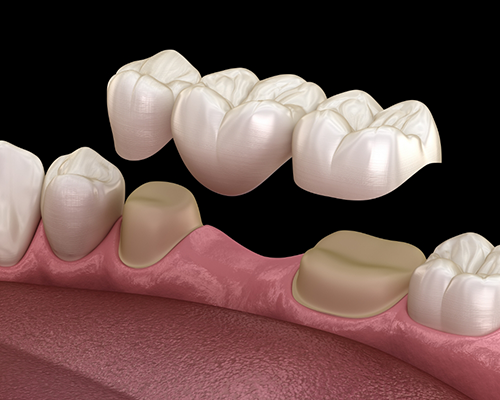
You may know that dental bridges are used to replace one missing tooth or several missing teeth in a row, but what exactly are they? In short, the term “dental bridge” got its name because it literally bridges the gap left by tooth loss. This is done with a custom-made prosthetic tooth (or prosthetic teeth, if you are missing more than one), which is anchored securely in place with dental crowns or dental implants.
Types of Dental Bridges
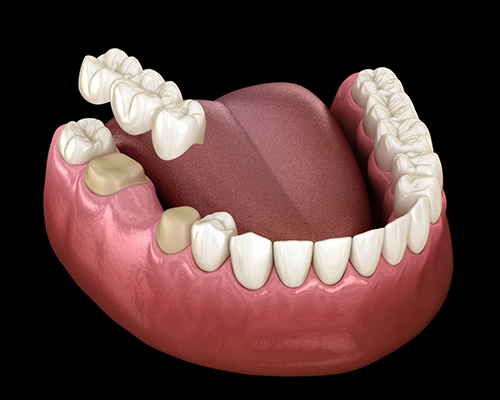
As we mentioned above, dental bridges can be held securely in place with either dental crowns or dental implants. We offer both traditional and implant bridges at our office, and we’ll review the pros and cons of each option in depth so you can confidently decide on the best way to move forward. In the meantime, you can read on to learn more!
Traditional Dental Bridge
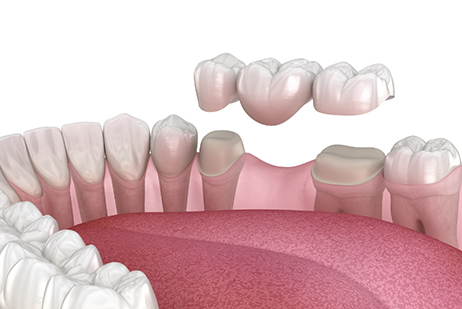
Traditional dental bridges are anchored in place with two lifelike, durable, and custom-made dental crowns. This might require altering your healthy teeth, but the result will be natural in both look and function. Plus, with proper care, your restoration can last for a decade or more!
Implant Bridge
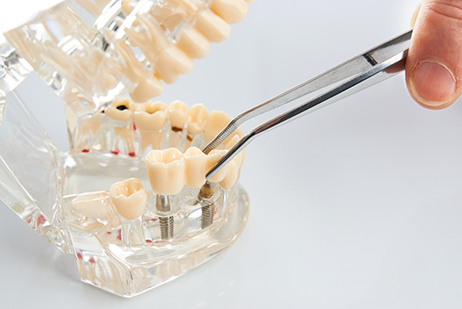
Unlike traditional dental bridges, those anchored by dental implants are inserted directly into your jawbone, which makes them superior at preventing bone loss. It’s also worth noting that dental implants have a high success rate and can last for 20+ years!
The Benefits of Getting a Dental Bridge

If you are currently in the process of deciding which tooth replacement solution is best for you, you might find it helpful to learn some of the many reasons so many patients have chosen dental bridges. Here are a few:
- You can maintain your dental bridge with many of the same best practices you use to care for your natural teeth.
- This restoration is custom-made, which ensures that it looks as great as it feels.
- Filling the gap in your smile will help prevent problems like dental drift.
- With proper care, your dental bridge can last for over a decade.
Dental Bridges FAQs
What Are Dental Bridges Made Of?
Historically, dental bridges were made from metallic mixtures containing silver, tin, copper, or gold, with mercury as a bonding agent. Though incredibly durable, these amalgam bridges look dark in your mouth and often cause allergies or sensitivity.
Today, most dentists provide tooth-colored dental bridges made from resilient ceramic. Not only can this material withstand the daily forces of biting and chewing, but it can also be customized to match your natural teeth, resulting in a beautifully restored smile. Thanks to more recent advancements in materials and technology, these replacement teeth are more comfortable and lifelike than ever before.
Are Dental Bridges Removable?
Your dental bridge is anchored via two dental crowns on either side of the pontics (artificial teeth) to close the space in your smile. Once it’s cemented in place, it can only be removed by a professional, such as one of our providers in Louisville.
Does Getting a Dental Bridge Hurt?
Our dental team in Louisville will need to remove a small amount of enamel from the teeth on either side of the space in your smile to ensure your bridge fits over them correctly. As a result, you may wonder whether this procedure will be painful.
Rest assured, our Bell Dental team will do everything we can to help keep you comfortable throughout your appointment. For example, we’ll provide a local anesthetic before beginning work to prevent any potential sensitivity or other adverse sensations. Then, it’s normal to feel tender for a few days after your bridge is placed. Taking Tylenol or ibuprofen is usually sufficient to safely reduce any associated aches or inflammation, which should be minimal.
How Long Do Dental Bridges Last?
Typically, these restorations last five to 10 years or more, though it depends significantly on how well you care for them. Your prosthetic can’t develop cavities, but the abutment teeth that hold it in place can develop decay, which can result in its failure. To maintain your replacement teeth, brush and floss twice daily to remove plaque and bacteria that contribute to common oral issues. You should also avoid overly hard, sticky, or darkly tinted foods, which can prevent damage, discoloration, and destabilization.
Don’t forget to also schedule a routine checkup and cleaning with our team every six months so we can catch and treat any areas of concern before they become more serious!