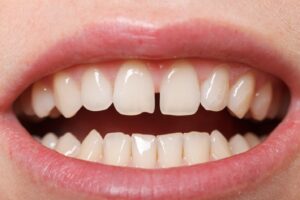
From Mike Tyson to Michael Strahan, gaps between teeth, or diastemas, are common to people from all walks of life. Some people, like Strahan, embrace theirs, while others are not so comfortable with gaps in their smile and seek cosmetic treatment. Maybe this is you and you’ve come across veneers in your research and wondered, “Could this be the answer to my diastema dilemma?” Let’s dive in and learn more about this prosthesis and whether it’s right for you!
How Can Veneers Close Gaps?
Veneers are thin shells made from materials such as porcelain or composite resin that are bonded to the front surfaces of teeth. Their shape and size are customized to make teeth appear slightly wider, reducing or eliminating the visible space between them.
For example, veneers can sometimes close a small gap between the two upper front teeth, where diastemas are commonly found and highly visible. They can also address other cosmetic concerns at the same time, such as discoloration, chips, or uneven tooth shapes, making them one of the most versatile remedies when it comes to cosmetic enhancements.
When Might Veneers Be a Good Option?
Veneers may be appropriate when the gaps are relatively small and your teeth and gums are healthy. They’re particularly appealing to people who want to address spacing along with other cosmetic imperfections (again, versatile!) or to avoid the financial and time commitments required by orthodontic treatment.
Your dentist will consider the size and location of your gaps, the proportions of your teeth, your bite, and your overall smile when determining whether veneers are appropriate. The goal isn’t simply to cover the gap. Your dentist needs to create proportions that look natural and function properly.
When Might Another Treatment Be Better?
Veneers aren’t always the best way to close a gap. If spaces are caused by significant tooth positioning or bite problems, traditional braces or clear aligners may be more appropriate. These treatments actually move teeth into better positions instead of simply changing their appearance.
Dental bonding can also be an alternative for some small gaps. It involves sculpting and applying tooth-colored composite material directly to the teeth to correct things like color, size, and shape. Bonding may require less alteration of natural tooth structure than traditional veneers.
If a gap developed because of gum disease, missing teeth, or another underlying oral health problem, that issue should be addressed before considering cosmetic treatment.
Are Veneers a Permanent Solution?
If you take good care of porcelain veneers through daily brushing and flossing, avoiding biting down on hard objects, and regular dentist visits, you can typically expect a lifespan of 15 to 18 years. That’s a long time, but it’s not permanent. They may eventually require replacement.
It’s also important to remember that getting veneers may involve removing some enamel from the surface of the teeth to place them, making the decision a significant one. Enamel doesn’t grow back!
If gaps in your smile make you feel self-conscious, veneers may be one possible solution, but they’re not automatically the best one. Start out by scheduling a consultation with a dentist who offers cosmetic services so they can evaluate your teeth and gums and discuss veneers, bonding, clear aligners, or other options.
About the Practice
You don’t have to live with a smile you’re unhappy with! At Bell Dental, we can give you a red carpet-ready look in just 2 visits to our Louisville office with veneer treatment. Or if you’re interested in other ways to spruce up your smile, we also offer teeth whitening, dental bonding, and complete smile makeovers. Make your appointment online or by calling (502) 749-2355.